

A connected world.
Beyond the limits of traditional internet.
Compare satellite internet providers, understand the science, and find the right connection for your home, travels or emergency kit.
Thinking about Starlink? Get a $100 reward.
Eligible new US customers only; qualifying service required. We may also receive a referral reward if you qualify. Independent site, not affiliated with Starlink or SpaceX.
What brings you here today?

I’m considering satellite internet
Compare options, costs and measured performance.
Explore guide →
I’m curious about satellites
Space, astronomy and technology.
Explore guide →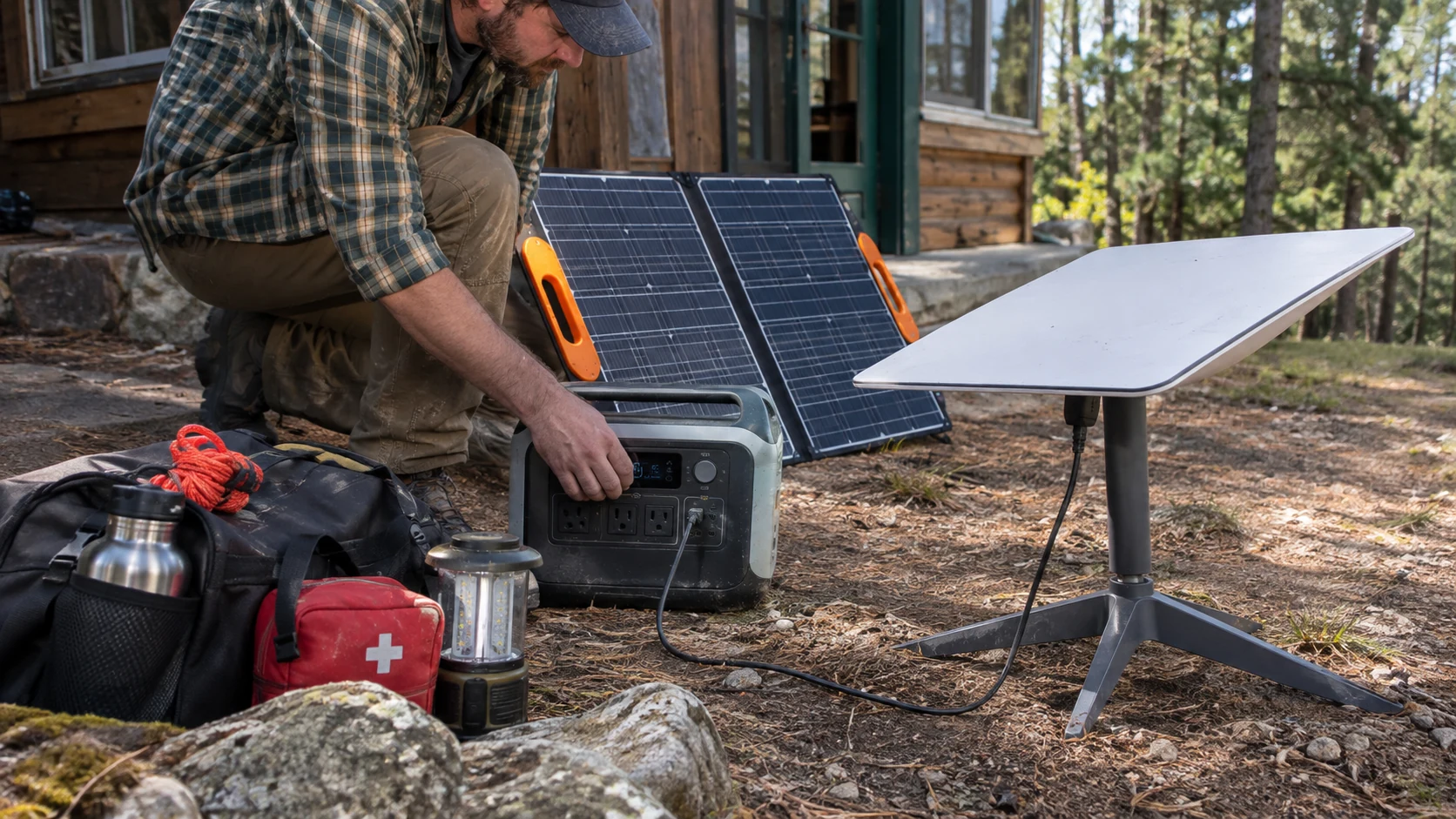
I want emergency internet
Backup power and preparedness.
Explore guide →
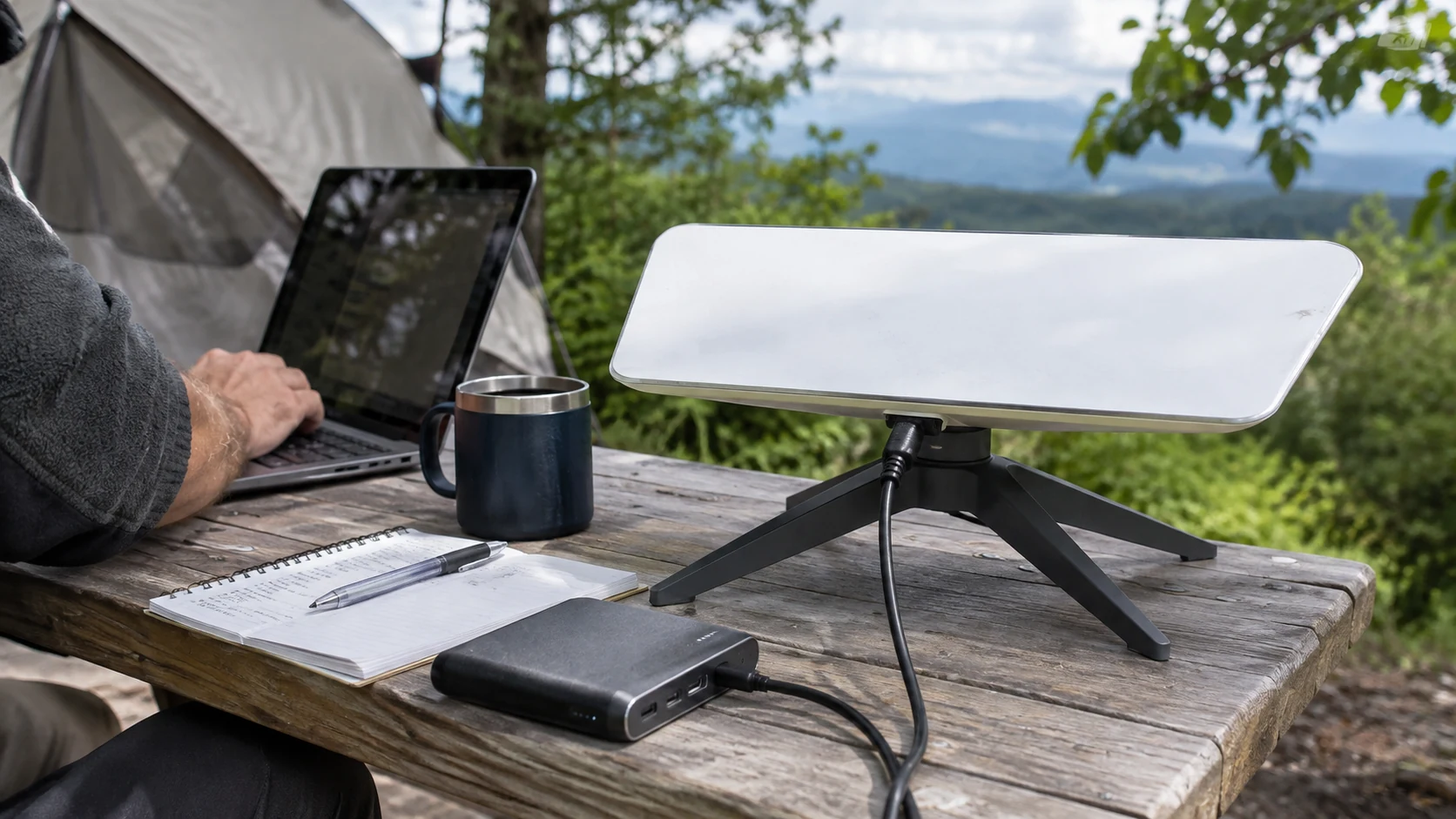
I want internet on the go
RV travel, camping and remote work.
Explore guide →New · Space science & communications
Understand the science behind your connection
Explore our knowledge center
Discover the world of satellite connectivity
Satellite internet & buying guides
Equipment, plans, pricing and comparisons.
Space & astronomy
Satellite trains, orbits and the night sky.
Emergency preparedness
Backup connectivity, disasters and resilience.
Science & engineering
Research, physics and technical explanations.
Travel & outdoor living
Camping, RVs, boating and remote work.
Industry news
Launches, competition and technology updates.
Satellite internet: compare real performance
In this independent US dataset, Starlink led Hughesnet and Viasat on median download, upload and latency. Compare the figures and see when a different connection may make more sense.
Download
Higher is better
Upload
Higher is better
Latency
Lower is better
Source: Ookla, Starlink Hits New Highs in the U.S. (May 5, 2026), US Q1 2026 median Speedtest results. Accessible copy. These are user-test medians, not a controlled comparison at your address or a service guarantee. Hughesnet hybrid plans may behave differently. Amazon Leo is not ranked because comparable public residential data was not verified.
Featured offer · Starlink
Get connected. Save more.
Compare your actual checkout quote, then use the referral link before ordering if Starlink is right for you.
Advertised Mini promotion through
- Hardware savings vs. listed comparison price
- $100
- Potential referral reward
- $100
- Net hardware-equivalent cost if both offers apply
- $49
The countdown estimates the end of the advertised date in Eastern Time; the exact cutoff was not published. Service charges, shipping, taxes and accessories are extra. The reward is conditional, not deducted from the hardware checkout price.
New direct-order customers on qualifying plans must complete two full billing cycles. Confirm the reward and current price with Starlink; terms may change.
We may also receive a referral reward if you qualify. Independent site, not affiliated with Starlink or SpaceX. Disclosure.
Latest news & research

Amazon Leo launches 36 more satellites: what it means for customers
Amazon Leo passed 400 deployed satellites following a successful Ariane 6 mission; consumer pricing and ordering remain unconfirmed.
Read the story →Starlink around trees: the science behind improved satellite coverage
A growing constellation and adaptive switching can make partially obstructed sites more practical, but a clear sky still matters.
Read the story →Iridium activates NTN Direct: satellite connectivity for small connected devices
Iridium announces standards-based narrowband satellite service for compatible connected devices, with availability dependent on device and country.
Read the story →SpaceX selects Qualcomm for Starlink Mobile terrestrial 5G
Qualcomm will supply cellular infrastructure platforms for SpaceX’s planned US terrestrial 5G rollout, expected to begin in 2027.
Read the story →See how satellite internet works

Orbital altitudes
Compare LEO, MEO and GEO.

Phased-array antennas
How electronic beam steering works.

Laser communications
Follow a possible inter-satellite path.

Off-grid power
Understand generation, storage and demand.

Satellite visibility
Why satellites vanish into Earth’s shadow.

Internet failover
How two connections can protect one network.
Original educational diagrams. Schematic and not to scale.
Think trees rule out Starlink? Check again.
Partial sky visibility may be sufficient in some locations. Learn what changed, what still blocks connectivity and how to assess your property.
Read the obstruction guide → Check your installation · Technology updates
Make a more informed connection.
Make a more informed connection.
Deals & pricing
Dated offer snapshots and real ownership costs.
Explore →9 free planning tools
Battery, solar, data, service and more.
Explore →Illustrated encyclopedia
Understand orbits, satellite trains and internet signals.
Explore →Real-world test lab
Transparent test methods and future results.
Explore →Is Starlink worth it?
Compare alternatives before you buy.
Explore →Starlink vs Amazon Leo
Understand the competing satellite networks.
Explore →Did you see a line of lights in the sky?
Those star-like dots could be a newly launched Starlink satellite train. Discover why they appear, how to identify them and when to look up again.
Find out what you saw → Check tonight’s passes →Everything to know before you order
Everything to know before you order
Starlink $100 referral reward
How to qualify without missing the reward
Read guide →Starlink Mini cost and deals
Calculate the real cost before you buy
Read guide →Starlink Standby Mode explained
Low-speed connectivity between active service periods
Read guide →Starlink for power outages
Build a practical backup internet plan
Read guide →Starlink Mini vs Standard
Choose equipment for your actual needs
Read guide →Starlink for camping and travel
Plan connectivity away from home
Read guide →Find the answer. Understand the evidence.
Find the answer. Understand the evidence.
Compare five internet technologies
Fibre, cable, 5G, low-orbit and geostationary satellite: costs, physics and real-world reliability.
Read the complete guide →Science & Research Library
Original studies, public records, technical specifications and what their findings really mean.
Explore the evidence →Search all collected guides
Find answers by question, keyword or topic, including article text.
Open the knowledge index →Eight complete guides, one satellite internet knowledge center
Eight complete guides, one satellite internet knowledge center
Explore chaptered guides, engineering, emergency communications, provider profiles, hardware and historical data.
The complete guide to Starlink
From the first purchase to installation, network reliability, roaming, long-term costs and troubleshooting.
Explore reference →The complete guide to satellite internet
An illustrated introduction to satellite broadband, orbits, terrestrial alternatives, economics, and real-world performance.
Explore reference →The complete guide to emergency internet and communications
Design a resilient family communications system with satellite broadband, radio, backup power and independent distress options.
Explore reference →The complete guide to Starlink Mini
A practical reference for Mini hardware, power sources, setup, performance, portability and first-year ownership.
Explore reference →The complete guide to off-grid internet and solar power
Calculate energy needs, choose compatible battery and solar equipment, and plan for poor weather and emergency duty cycles.
Explore reference →The complete guide to satellites in the night sky
Identify satellite trains, understand visibility and orbital motion, and find safe and reliable viewing predictions.
Explore reference →The complete guide to satellite internet technology
Understand antennas, spectrum, link budgets, orbital mechanics, Doppler shift, laser crosslinks and network handoffs.
Explore reference →The complete guide to satellite internet providers
Compare SpaceX Starlink, Amazon Leo, Eutelsat OneWeb, Hughesnet, Viasat, Iridium and Globalstar by actual service category.
Explore reference →Explore the full reference center → · Historical data · Original testing workbench
Browse the original guide catalog
Find answers to your satellite internet questions
Getting started
How does Starlink satellite internet work?
Starlink uses low Earth orbit satellites to connect a user terminal to the internet. Unlike a mobile hotspot, the terminal communicates with satellites rather than relying on a nearby cellular tower.
Read guide →Starlink installation: where to put your dish
A clear sky view is the most important starting point for a reliable installation.
Read guide →Starlink troubleshooting: slow speeds and disconnects
Start by identifying whether the issue is power, satellite connectivity or your local Wi-Fi network.
Read guide →Starlink coverage and availability by location
Coverage maps are a starting point, not a guarantee that a particular plan is available at every address.
Read guide →Use cases
Starlink for rural homes, farms and cabins
Satellite internet can be particularly useful where wired broadband is unavailable or unreliable.
Read guide →Starlink for RVs, van life and road trips
A portable satellite terminal can connect a campsite when cellular coverage is weak, provided the sky is sufficiently clear.
Read guide →Starlink on boats and offshore: what to know
Marine connectivity depends on the service plan, equipment, location and whether the vessel is moving.
Read guide →Power and preparedness
How to power Starlink with a battery or solar panel
Size backup power in watt-hours, not just the maximum watt rating printed on a power station.
Read guide →Does Starlink work in rain, snow and storms?
Satellite internet can remain useful during many outages, but heavy precipitation and physical obstructions can degrade service.
Read guide →How to build a home backup internet system
A useful backup system includes a second internet path, independent power and a tested switching procedure.
Read guide →Everyday use
Can you make phone calls and send texts using Starlink?
Starlink provides internet access; it does not automatically turn a normal mobile phone into a satellite phone.
Read guide →Starlink speeds, latency, streaming and gaming
Performance varies with location, congestion, service tier, obstructions and Wi-Fi quality.
Read guide →Starlink for remote work and home offices
Satellite broadband can support remote work when the connection and employer requirements are suitable.
Read guide →Starlink for security cameras and smart homes
Remote cameras and smart devices can use satellite internet, but continuous uploads and power requirements matter.
Read guide →Starlink in the night sky
What is that line of moving lights in the sky?
A chain of steady, star-like lights moving together is often a Starlink satellite train, especially in the days after a launch.
Read guide →When can I see Starlink satellites tonight?
Find predicted satellite passes near your town and learn when, where and how to look for the Starlink train.
Read guide →Starlink, airplanes, meteors or UFOs: how to identify lights in the sky
Compare common night-sky sightings before deciding whether an unfamiliar light is a satellite.
Read guide →How high and how fast are Starlink satellites?
Understand low Earth orbit, orbital speeds, altitude, travel time and why satellites stay in space.
Read guide →How many Starlink satellites are in space right now?
Learn where to check current satellite numbers and why launched, orbiting and operational counts differ.
Read guide →What happens to retired Starlink satellites and the night sky?
Explore orbital retirement, collision avoidance, space debris and the effects of large constellations on astronomy.
Read guide →How do Starlink satellites provide internet from space?
Follow an internet request from a home dish to orbit and back, including ground gateways and inter-satellite links.
Read guide →How to watch a Starlink rocket launch and satellite deployment
Find SpaceX launch schedules, understand launch windows and know the difference between watching a launch and a satellite pass.
Read guide →Can Starlink connect directly to your cell phone without a dish?
Understand direct-to-cell satellite connectivity, supported phones, carrier plans and the difference from Starlink home internet.
Read guide →Buying decisions
Is Starlink worth it? Pros, cons and who should buy
Starlink is most compelling where wired broadband is slow, unavailable or unreliable. It is not automatically the best choice for every household.
Read guide →How much does Starlink really cost per year?
The subscription usually dominates the cost of ownership. Compare the full twelve months, not just the advertised dish price.
Read guide →Which Starlink plan should I choose?
Choose service according to where you will connect, how much data you use and whether the terminal moves.
Read guide →Can you buy Starlink without a monthly subscription?
Owning a terminal is not the same as having internet service. A purchased kit generally needs an authorized plan to provide ordinary connectivity.
Read guide →Starlink Mini vs a mobile hotspot
The better portable internet connection depends on local cell coverage, a clear sky view, power and data needs.
Read guide →Can Starlink replace my home internet?
It can be a primary connection, but the decision depends on your existing broadband, installation location and reliability needs.
Read guide →Buying Starlink at Costco or another retailer vs directly
Compare the delivered price, exact kit, warranty, return policy and eligibility before choosing where to buy.
Read guide →Starlink hidden costs and additional expenses
Unexpected expenses often come from installation, electricity, data use and plan changes rather than the terminal itself.
Read guide →Can I cancel and reactivate Starlink anytime?
Cancellation, pausing and changing service plans have different billing and availability implications.
Read guide →Power and preparedness
Can Starlink work without electricity?
A satellite dish cannot operate without electrical power, but it can use suitable backup electricity when the grid is down.
Read guide →Would Starlink work during a nationwide internet outage?
It depends on what failed. Satellite access is an alternative route, not a guarantee that every part of the internet will remain available.
Read guide →Can Starlink Mini run on a car battery?
A suitable vehicle power supply may operate a Mini, but protecting the vehicle's starting battery is essential.
Read guide →Travel and use cases
Can I use Starlink in two different locations?
One portable terminal may serve different locations sequentially, but the plan and location rules determine whether it can connect.
Read guide →Can Starlink work while driving?
Some service plans and hardware support in-motion use in permitted regions. A portable kit is not automatically approved for every moving vehicle.
Read guide →Can you use Starlink internationally?
Cross-border satellite service depends on the plan, account home region, travel duration and local authorization.
Read guide →Starlink for vacation homes and Airbnb properties
Satellite internet can help a remote rental or seasonal cabin, provided the site offers a clear sky view and service is appropriate for guest use.
Read guide →Starlink for hunting, fishing and remote adventures
Portable satellite broadband can help at a remote base camp, but it should not be your only way to summon help.
Read guide →Starlink for construction sites and mobile businesses
Temporary broadband can help a job site or mobile operation where fixed service is unavailable or slow to install.
Read guide →Equipment and performance
Can Starlink work through a window?
Some glass may allow a connection, but windows and limited sky visibility can make service intermittent. Outdoor placement is generally preferable.
Read guide →How many devices can connect to Starlink?
The number of devices a router can associate is different from the number that can simultaneously use high-bandwidth applications comfortably.
Read guide →Can you watch Netflix with Starlink?
Streaming is practical on suitable high-speed service, but available bandwidth and high-speed data allowances matter.
Read guide →Does Starlink work in wooded areas?
Trees and dense foliage can block the satellite path. A small gap in the canopy may not be enough for continuous service.
Read guide →Space and science
What happens to Starlink during a solar storm?
Space weather can affect satellites, radio signals, navigation and ground infrastructure. The severity and type of event determine the risk.
Read guide →Can Starlink satellites collide with each other?
Collisions are physically possible, although operators use tracking and avoidance procedures to reduce the risk.
Read guide →Starlink vs Amazon Leo satellite internet
Both use low Earth orbit networks, but customers should compare actual service availability and measured performance rather than announced capabilities alone.
Read guide →More essential guides
Starlink Mini cost and deals
Calculate the real cost before you buy
Read guide →Starlink Mini vs Standard
Choose equipment for your actual needs
Read guide →Starlink for power outages
Build a practical backup internet plan
Read guide →Starlink $100 referral reward
How to qualify without missing the reward
Read guide →Starlink Standby Mode explained
Low-speed connectivity between active service periods
Read guide →Starlink for camping and travel
Plan connectivity away from home
Read guide →No matching guides. Try another search.
New installation, buying and technology guides
Starlink and partial obstructions: what has changed?
Starlink advertises improved connectivity around partial obstructions, citing 11,000 satellites in a November 2026 advertisement supplied to our editorial desk. This is a dated company claim, not a verified operational count or a guarantee at your address.
Read guide →Does Starlink work in mountains and valleys?
Mountain ridges can mask large portions of the sky even if the immediate property has no trees.
Read guide →Starlink for remote industrial and utility sites
Remote utility, agricultural and industrial sites may benefit from satellite connectivity when terrestrial infrastructure is unavailable.
Read guide →Is Starlink easy to install yourself?
A temporary setup on stable ground can be straightforward; permanent installations may require professional help.
Read guide →Starlink for truck drivers and mobile workers
Satellite internet can help workers stay connected at remote stops beyond cellular coverage.
Read guide →Can Starlink Mini work through a windshield?
Some users report success through vehicle glass, but results depend on glass coatings, roof geometry and location.
Read guide →How important is Starlink dish alignment?
Electronic steering helps the terminal follow satellites, but physical orientation still matters.
Read guide →When should you not buy Starlink?
Satellite internet is useful in many places, but it is not always the best connection.
Read guide →Starlink vs rural fiber: which is better?
Compare the service actually available at your address, not the technology label alone.
Read guide →Starlink mounting locations: ground, pole, roof and more
The best mount balances sky access, safe installation, maintenance and cable routing.
Read guide →Starlink Mini November 2026 holiday deal
A dated guide to the November 2026 Mini hardware offer, rather than a promise of a current Black Friday or Cyber Monday discount.
Read guide →Starlink before-you-buy checklist
A practical buying decision starts with your address, use case, budget and installation conditions.
Read guide →Your first day with Starlink: setup and acceptance checklist
A structured first-day test helps you decide whether the installation meets your needs.
Read guide →Satellite internet news and technology updates
Dated updates, with manufacturer claims clearly distinguished from independent measurements.
Read guide →News, science & independent research
Starlink around trees: the science behind improved satellite coverage
A growing constellation and adaptive switching can make partially obstructed sites more practical, but a clear sky still matters.
Read the story →Starlink V3: what the next generation means for internet capacity
SpaceX reports the first V3 satellites were deployed in late September 2026.
Read the story →Amazon Leo loses 40 satellites in Vulcan launch setback
Amazon confirmed its first Vulcan mission carrying Leo satellites failed to deliver its payload to orbit.
Read the story →How Amazon Leo plans to hand your connection from satellite to satellite
Amazon’s November explainer describes a moving low-orbit broadband network.
Read the story →Satellite phones without a separate dish: what comes next?
Japan’s KDDI announces a next-generation Starlink Mobile agreement with a target for 2027.
Read the story →More satellites, more responsibility: ESA’s 2026 space environment report
The European Space Agency’s annual report describes increasing congestion and debris risks.
Read the story →Why Starlink speed varies: a 2026 global measurement study
Researchers combine network measurements, weather and orbital data to study geographic differences.
Read the story →Starlink Roam and Standby: what emergency internet buyers need to know
A dated review of the US Roam listing and Standby support rules.
Read the story →Science, practical answers and reference library
Is Starlink internet really unlimited? Data limits, speed caps and priority
Unlimited data is not the same as unlimited high-speed data. Understand the plan before ordering.
Read guide →What happens when you exceed your Starlink Roam data allowance?
Learn how reduced-speed data, plan upgrades and billing cycles affect travellers.
Read guide →Can Starlink replace your mobile phone plan? Dish internet vs direct-to-cell
A Starlink dish and satellite-enabled handset solve different problems. Here is how to choose.
Read guide →Why do Starlink satellites suddenly disappear in the night sky?
The explanation is usually sunlight, geometry and Earth’s shadow — not a satellite switching off.
Read guide →Can Starlink survive an EMP or a major solar storm?
Separate space weather from electromagnetic pulse risks and design a realistic backup plan.
Read guide →How much electricity does Starlink use in a year?
Calculate annual kWh and cost for Mini, Standard and intermittent backup use.
Read guide →Can neighbours share a Starlink connection? Wi-Fi, guest access and service rules
Sharing a local network is technically different from reselling satellite internet.
Read guide →Can Starlink be hacked? A practical guide to satellite internet security
Understand the difference between local Wi-Fi security, account security and risks to satellite infrastructure.
Read guide →What happens if Starlink goes out of business? Continuity, hardware and alternatives
Understand the risks of depending on one satellite provider and how to plan for service changes.
Read guide →Can Starlink work anywhere on Earth? Coverage, licensing and travel limits
A global satellite constellation does not guarantee legal or usable service at every location.
Read guide →Satellite internet during natural disasters: documented case studies
What Hurricane Helene and Tonga teach us about realistic emergency communications.
Read guide →Starlink myths vs scientific facts: 12 claims explained
A fact-checking guide to common satellite internet misconceptions.
Read guide →Flagship guides and reference collections
The complete guide to Starlink
From the first purchase to installation, network reliability, roaming, long-term costs and troubleshooting.
Explore reference →The complete guide to satellite internet
An illustrated introduction to satellite broadband, orbits, terrestrial alternatives, economics, and real-world performance.
Explore reference →The complete guide to emergency internet and communications
Design a resilient family communications system with satellite broadband, radio, backup power and independent distress options.
Explore reference →The complete guide to Starlink Mini
A practical reference for Mini hardware, power sources, setup, performance, portability and first-year ownership.
Explore reference →The complete guide to off-grid internet and solar power
Calculate energy needs, choose compatible battery and solar equipment, and plan for poor weather and emergency duty cycles.
Explore reference →The complete guide to satellites in the night sky
Identify satellite trains, understand visibility and orbital motion, and find safe and reliable viewing predictions.
Explore reference →The complete guide to satellite internet technology
Understand antennas, spectrum, link budgets, orbital mechanics, Doppler shift, laser crosslinks and network handoffs.
Explore reference →The complete guide to satellite internet providers
Compare SpaceX Starlink, Amazon Leo, Eutelsat OneWeb, Hughesnet, Viasat, Iridium and Globalstar by actual service category.
Explore reference →A history of satellite communications: Sputnik to Starlink
Follow the transition from experimental radio relays to global commercial broadband constellations.
Explore reference →Satellite engineering reference and interactive orbital calculator
Work through key equations, units and simplified engineering examples.
Explore reference →Emergency communications: satellite phones, GMRS, ham radio and messengers
Compare communications layers, licensing and distress devices before selecting emergency gear.
Explore reference →Advanced home networking: dual WAN, failover, mesh, VPNs and security
Combine wired and satellite connections without confusing WAN failures with Wi-Fi problems.
Explore reference →Starlink equipment database: hardware families, specifications and compatibility
Compare documented average power requirements and model families; verify exact kit identifiers before buying.
Explore reference →Satellite environmental science: debris, reentry and astronomy
Understand orbital collision risks, atmospheric uncertainty and optical/radio astronomy impacts.
Explore reference →Global satellite internet availability and country research directory
Start with country-specific coverage and regulatory resources; compare local quotes without assuming worldwide authorization.
Explore reference →Satellite internet industry timeline and technology milestones
A dated record of communications milestones, industry announcements and regulatory developments.
Explore reference →Historical satellite internet data: prices, plans, counts and hardware
Download a transparent source-linked starter archive of dated industry records, separating examples from live quotes.
Explore reference →Original testing database and measurement workbench
Record actual Starlink speed, latency, energy, weather and obstruction tests locally and export a reproducible CSV.
Explore reference →Satellite provider directory and product-category lookup
Find the appropriate official provider or operator by service type, with source-linked profiles.
Explore reference →Satellite internet in United States: availability, plans and local research
A country-specific starting point for checking service, local alternatives, travel rules and quotes.
Explore reference →Satellite internet in Canada: availability, plans and local research
A country-specific starting point for checking service, local alternatives, travel rules and quotes.
Explore reference →Satellite internet in United Kingdom: availability, plans and local research
A country-specific starting point for checking service, local alternatives, travel rules and quotes.
Explore reference →Satellite internet in Australia: availability, plans and local research
A country-specific starting point for checking service, local alternatives, travel rules and quotes.
Explore reference →Satellite internet in Germany: availability, plans and local research
A country-specific starting point for checking service, local alternatives, travel rules and quotes.
Explore reference →OneWeb renewal: 32 replacement satellites reach launch preparations
What Eutelsat’s October 2026 manufacturing milestone means for the longevity of a LEO network.
Explore reference →Amazon Leo and Globalstar: proposed acquisition and the future of satellite-to-phone service
Distinguish the proposed merger, regulatory filing and future direct-to-device products from services available today.
Explore reference →How many satellites are actually in space? November 2026 ESA data explained
Learn how to interpret operating spacecraft, tracked objects and constellation counts without mixing categories.
Explore reference →Satellite internet reference center: the complete knowledge collection
Eight flagship guides, ten knowledge areas, searchable evidence, historical data and original measurement tools.
Explore reference →What will Starlink actually cost?
First-year ownership cost
Choose a scenario, then enter your actual checkout and service quotes. Active and standby months always total 12.
Two full qualifying billing cycles are required; confirm that the reward has matured and that pausing is permitted. The preset is illustrative, not a promise of eligibility.
Examples, not live quotes. Standby availability and price vary; confirm account eligibility and wait until the reward is secured before switching. The all-standby scenario is a cost model, not a guarantee that immediate standby is permitted.
Understand reward conditionsEligible new US customers may receive a $100 reward after two full qualifying billing cycles. We may also receive a reward. Not a checkout discount.
How the referral works
01 / Order directly
Use the referral link before buying a kit and eligible plan from Starlink.
02 / Activate and use
Maintain eligible high-speed service for two full monthly billing cycles.
03 / Receive reward
Eligible accounts receive a reward after approval. Standby does not qualify during the initial period.
Independent guide. I may receive a reward if you use my referral link and qualify. Not affiliated with Starlink or SpaceX.
Get Starlink $100 Offer ↗Eligible new US customers; two full qualifying billing cycles. Terms apply. Not a checkout discount. We may also receive a reward if you qualify. Offer details.